
Designed to build a strong foundation in language, maths, and science, with material matched to each child's stage of development.
Curriculum & learning
Learningthroughplay,growingthroughmeaning
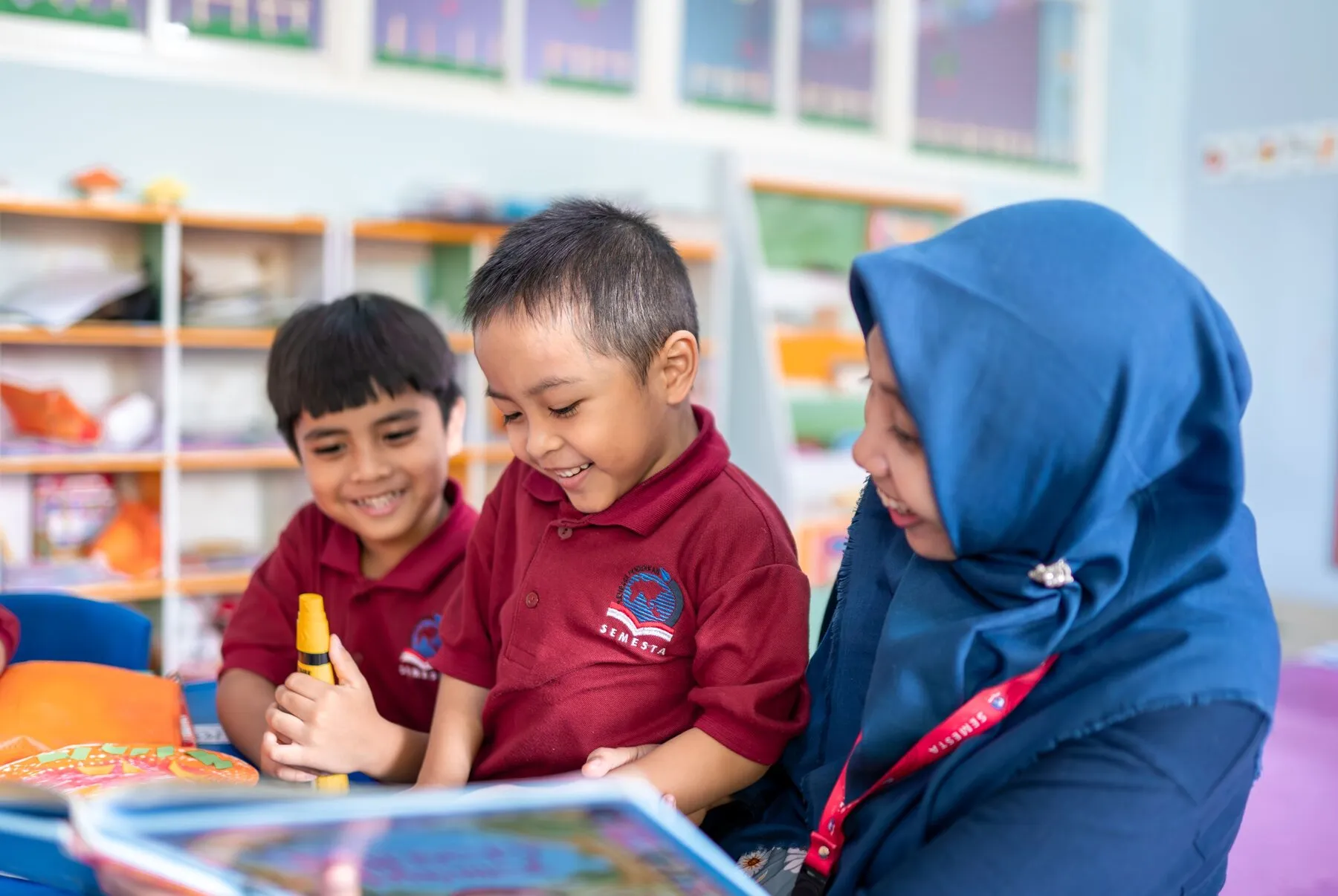
In our Early Years programme, children are introduced to the Cambridge curriculum, the National curriculum, and additional Montessori-based learning.
Curriculum
Three threads, one whole fabric.
Instils national pride and the core values of Pancasila.
Gives children the chance to learn actively through play, hands-on exploration, and experiences that encourage independence, creativity, and curiosity.
Together, these approaches support each child's whole development while making learning fun and meaningful for every child.
Approach
Five principles we hold to every day.
- 1
Experience
The most desirable way for young children to learn is through direct involvement and real experiences.
- 2
Active
Children should take part in their own learning through well-planned experiences that help them develop competence, independence, emotional attachment, and self-worth.
- 3
Balance
Learning should encourage a balance between physical, cognitive, language and communication, and social and emotional development.
- 4
Play
Learning should be age-appropriate, play-based, and child-centred, including both child-led and adult-led activities.
- 5
Transition
Early childhood education should help children move successfully into primary school, from informal play-based learning towards more formal teaching.
Stages of Education
The first step on the Cambridge Pathway.
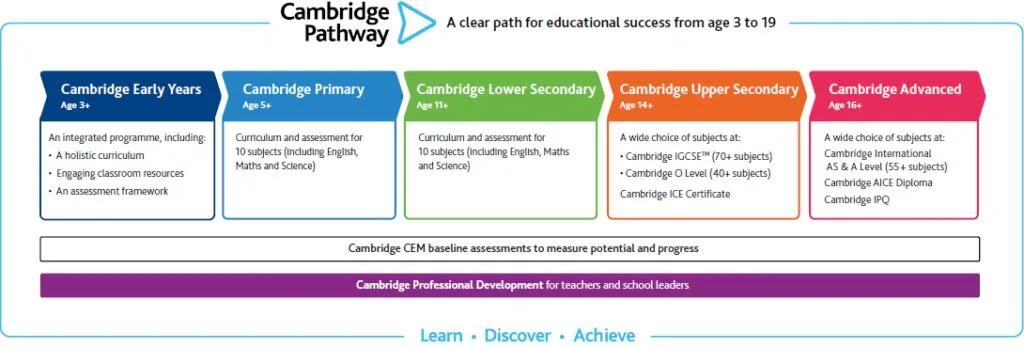
PG-TK Semesta follows the Cambridge Curriculum, namely Cambridge Early Years — a programme for children aged 3–6.
The programme gives young learners the best start, helping them reach key early milestones and thrive both in and out of school. Cambridge Early Years is the first stage of the Cambridge Pathway, a clear route to educational success for students aged 3 to 19.
3+Early Years we are here!
5+Primary
11+Lower Secondary
14+Upper Secondary
16+Advanced
Teaching Methods
Many ways to understand the world.
Our kindergarten uses a range of teaching and learning methods to give young learners a holistic education.
-
Active Learning
Encourages learners to take an active part in learning through projects, experiments, and games.
-
Literacy Programme
A range of literacy activities, such as reading, writing, and storytelling, to develop language skills.
-
Character Education
Focuses on developing positive values, social skills, and emotional intelligence.
-
Physical Education
Encourages fitness and healthy habits through a variety of sports and physical activities.
-
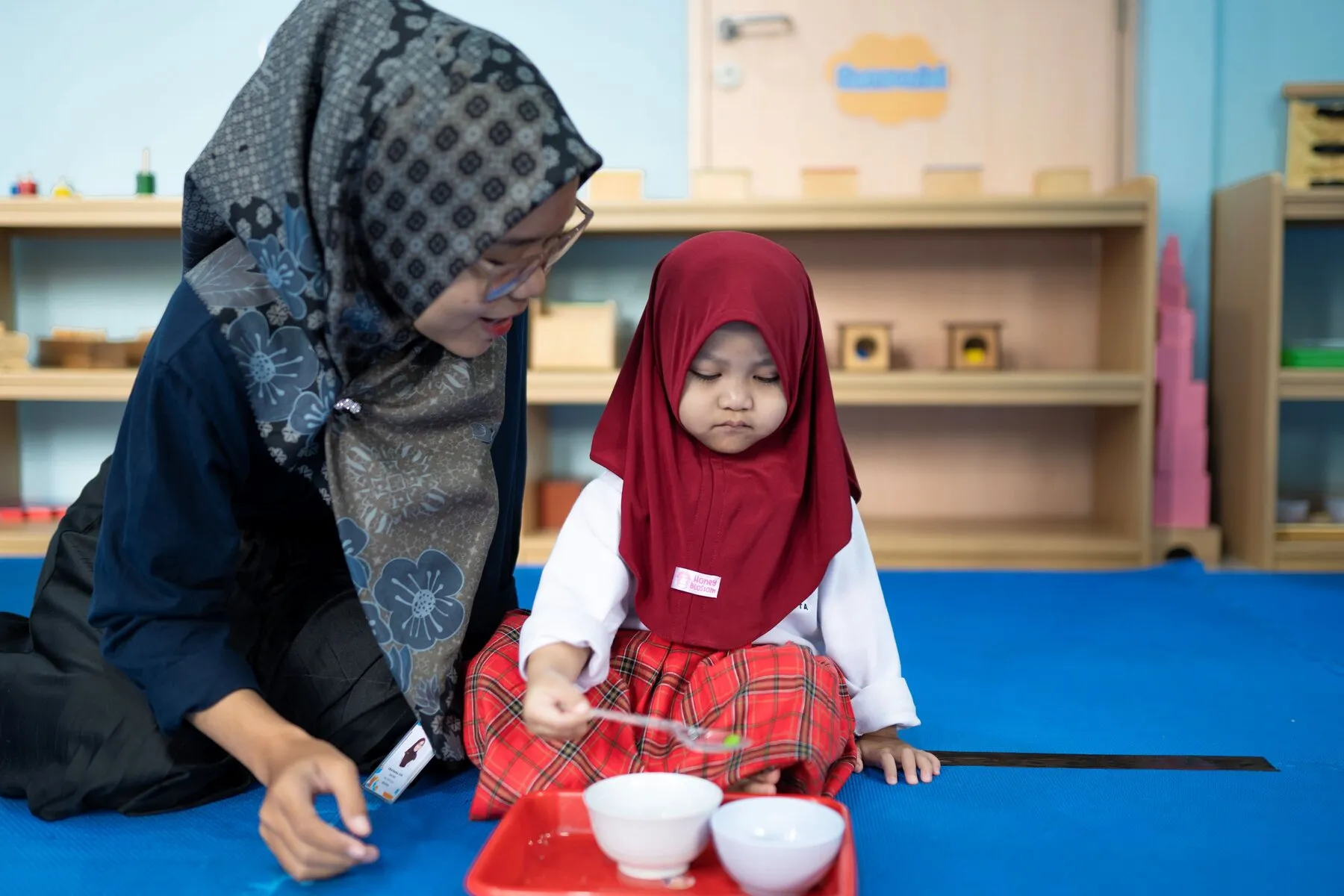
Montessori Method
A child-centred approach that emphasises independent learning, hands-on activities, and exploration at each child's own pace.
Areas of Learning
Eight key areas of child development.
- 1
Religious and Moral Values
Introduces the idea of God, builds spiritual awareness, and instils moral values such as honesty, fairness, tolerance, empathy, and respect for diversity.
- 2
Personal, Social & Emotional Development
Supports wellbeing, friendship, emotional regulation, self-confidence, and care for others.
- 3
Communication & Literacy
Develops speaking, listening, reading, and writing skills through engaging activities.
- 4
Mathematics
Introduces mathematical language, concepts, and patterns of thinking through games and activities.
- 5
Physical Development
Encourages movement skills, a positive attitude to sport, and a healthy lifestyle.
- 6
Creative Expression
Channels ideas and imagination through art, music, dance, and drama while sharpening skills.
- 7
Fine Motor Skills
Improves precision, coordination, and hand control through activities such as drawing, cutting, and threading.
- 8
Understanding the World
Grows curiosity by exploring science, technology, the humanities, and the surrounding environment.
Spiral approach
Revisited, then deepened.
We build knowledge, understanding, and skills through a spiral approach, revisiting and deepening topics and skills at every stage.
A spiral approach revisits material step by step, going deeper each time. The same topics and concepts come back at different stages of education with rising difficulty — steadily strengthening understanding and skills.
- Helps learners meet internationally recognised early-years developmental milestones. Every child develops at a different rate, and the curriculum gives teaching and learning a structure that helps track and support each child's progress.
- Supports a bilingual or multilingual approach for learners.
- Prepares learners to move smoothly into Primary School or the next stage of education.
Assessment & Reports
Watched closely, talked through together.
Assessment. Teachers assess each child's development through regular observation during lessons and daily activities at school. Observations are used to track each child's progress and learning needs.
Reports. Report Distribution takes place four times a year. Parents or guardians meet the homeroom teacher in person to discuss their child's development — how they learn, what they have achieved, and which areas need continued support.
4times a year
meet the teacher, talk about your child
Resources Education
Learning resources, in every shape.
We use a wide range of resources so learning is varied, engaging, and matched to each child's needs and stage of development — letting children learn in many ways, explore new things, and enjoy every step.
1National Curriculum
A curriculum based on national education policy and adapted to the needs and developmental stage of each learner. It forms the basis of our teaching and supports children's development as a whole: knowledge, skills, character, and positive values.
Legal basis: Regulation of the Minister of Education, Culture, Research, and Technology of the Republic of Indonesia No. 12 of 2024 on the Curriculum for Early Childhood, Primary, and Secondary Education.
2Cambridge Early Years
The Cambridge international curriculum sets a global standard for education and is recognised by universities and employers worldwide. We begin preparing children's education from Playgroup and Kindergarten.
3Character Education
A social-emotional learning programme for preschool to grade 6, designed to encourage communication and understanding between genders, interaction and a sense of togetherness inside and outside the classroom, and to raise children into loving, caring adults.
4Montessori Method
Sees each child as an individual with a natural desire to learn, able to begin learning on their own in a supportive, thoughtfully prepared environment. The method aims to develop the child physically, socially, emotionally, and cognitively.
5Literacy & STEAM
Literacy & STEAM is an early-years approach that integrates literacy with Science, Technology, Engineering, Arts, and Mathematics (STEAM) through play that is fun, creative, and meaningful.
Children get to know letters, sounds, vocabulary, and stories, and develop listening and communication skills. At the same time they observe their surroundings, run simple experiments, solve problems, build and create, explore basic maths concepts, and express ideas through art.
Learning is designed around how young children learn best, with an emphasis on curiosity, creativity, critical thinking, communication, collaboration, and independence. Through hands-on experience and exploration, children do not just learn a concept; they learn to ask, try, discover, and retell what they found.
The aim of Literacy & STEAM is a holistic learning experience, so children grow into active, creative, confident learners with a foundation in literacy and problem-solving from an early age.